Closed-Loop AI Agent Systems Integrate Feedback, Monitoring, and Correction Mechanisms to Prevent Silent Failures
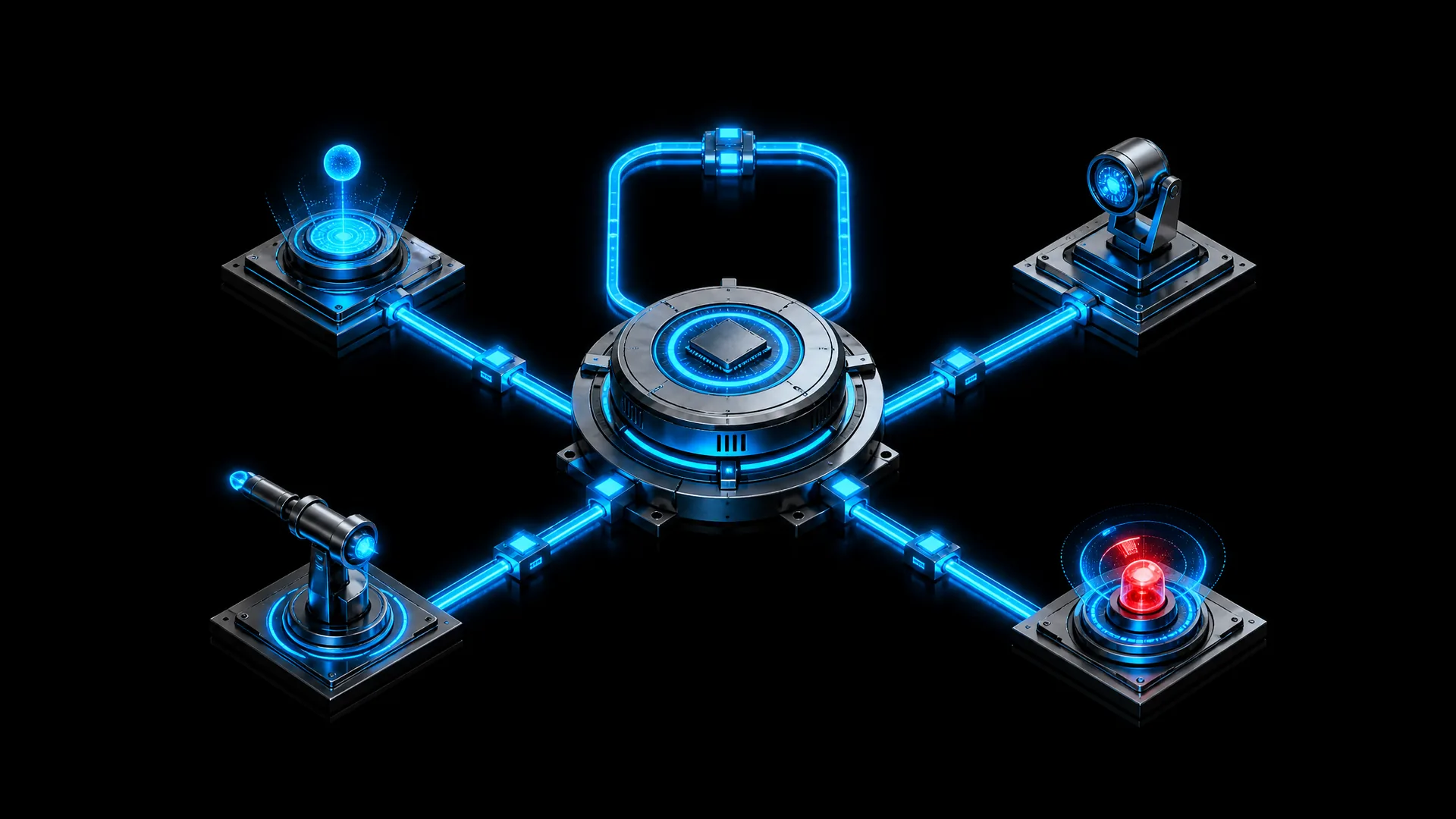
Autonomous AI agents are moving fast into enterprise production, and most of them are flying blind. The promise is self-directed execution: agents that reason, act, and complete tasks without constant human intervention. The reality in too many deployments is an open-loop system that runs until something breaks, and often nobody notices until the damage is downstream. Closed-loop AI agent systems solve this by design. They integrate feedback, monitoring, and correction mechanisms directly into the agent architecture, not as afterthoughts, but as structural requirements. This is the difference between a demo and a system you can trust in production.
Why Most AI Agent Deployments Break Without a Closed Loop
Agents fail in a specific, predictable way when feedback is absent. They execute, produce output, and move on, with no mechanism to detect whether that output was correct, coherent, or even within the expected operating range. The system completes tasks on paper while silently degrading in quality. Post-mortems in enterprise AI deployments that reached production in 2025 and into 2026 show the same pattern consistently: agent-related incidents, silent failures, hallucinated outputs accepted downstream, runaway execution loops, now account for the dominant class of post-deployment reliability failures, outpacing infrastructure and integration issues in operational reviews.
This is not a model problem. The underlying language models may be performing exactly as designed. The failure is architectural.
The Open-Loop Problem: Autonomous Execution Without Accountability
An open-loop agent has no comparator. It receives input, processes it, and produces output without ever checking whether the result meets a defined standard. There is no state comparison, no confidence threshold, no correction trigger. The agent executes and reports success regardless of output quality.
This creates a category of failure that is uniquely dangerous in enterprise contexts: confident wrongness. The agent marks a task complete. Downstream processes accept the output. No exception is raised. The error propagates through the workflow before any human sees it, if a human ever does.
Control systems engineering has established this principle for decades: any autonomous process without a feedback mechanism is inherently uncontrollable over time. The same discipline that governs closed-loop control in aerospace and industrial automation applies directly to AI agent architectures operating in dynamic enterprise environments. That framing is not metaphor. It is the correct engineering model.
Anatomy of a Closed-Loop AI Agent System
A closed-loop system is defined by one thing: output is measured against a reference state, and any deviation triggers a corrective response. Applied to AI agents, this means four structural components must be present before an agent runs in production.
Core Components: Sensor, Comparator, Actuator, and Memory
Sensor, the mechanism that captures agent output and environmental state. This is more than logging. The sensor reads what the agent produced, what signals accompanied that output (confidence scores, token distributions, retrieval results), and what the downstream state looks like after execution.
Comparator, the logic that evaluates captured output against defined reference criteria. This is where thresholds live: acceptable confidence bands, output format checks, constraint validation, semantic coherence scores. The comparator is the accountability layer that open-loop agents skip entirely.
Actuator, the component that executes corrective action when the comparator flags a deviation. Depending on severity, this ranges from a modified re-prompt to a hard halt with escalation. The actuator closes the loop by acting on the comparator's judgment rather than letting the deviation pass.
Memory, persistent state storage that allows the agent to carry forward correction history, prior context, and learned boundaries across task cycles. Without memory, each loop iteration starts cold, and patterns of failure cannot be detected across executions.
When building production-ready custom AI agents, the absence of any one of these four components leaves a structural gap that manifests as silent failure under load.
How Feedback Loops in AI Agents Drive Self-Correction
Feedback loops in AI agents work the same way they work in any control system: output state is continuously compared to reference state, and the delta drives corrective input. The loop is what makes the system controllable.
In practice, an agent that fails a confidence check does not simply return a bad answer and mark the task complete. The comparator catches the delta. The actuator injects a correction, modified context, a re-ranked retrieval result, an adjusted prompt, and the agent re-executes within the same task cycle. The output is re-evaluated. If it passes, the loop closes successfully. If it does not, the system escalates.
This is the core architecture behind closed-loop system design for AI workflow automation: structured iteration with defined exit conditions, not unbounded autonomous execution.
Agent Monitoring and Control: Observability as a First-Class Requirement
Observability in agent systems is not logging. Logging records what happened. Observability gives operators the visibility to understand current agent state, detect deviation in real time, and intervene before downstream processes consume bad output. Agent monitoring and control is the operational expression of the feedback loop, the interface through which human operators maintain authority over autonomous execution.
If you cannot observe agent state in real time, you do not control the agent. You have delegated without accountability.
What to Instrument: Outputs, Latency, Confidence, and Drift
Four signal categories are operationally essential:
Output quality signals, semantic coherence scores, format conformance, constraint satisfaction, and downstream validation results. These tell you whether the agent produced something usable, not just something.
Latency signals, per-task execution time, retrieval time, and loop cycle duration. Latency degradation often precedes quality degradation. A task that used to close in two cycles now takes eight, that pattern signals a problem before output quality fully collapses.
Confidence signals, token-level confidence distributions, retrieval similarity scores, and model uncertainty indicators where available. Low confidence on a high-stakes task is a correction trigger, not an acceptable output.
Drift signals, statistical deviation in output distributions over time. An agent whose outputs are shifting in vocabulary, length, structure, or sentiment relative to a baseline is drifting, even if individual outputs still pass point-in-time quality checks.
Operationalizing generative AI across structural layers requires treating observability instrumentation as infrastructure, not an add-on.
Self-Correcting AI Systems: Correction Mechanisms and Guardrail Design
Self-correcting AI systems are not agents that never fail. They are agents that detect failure and respond before the failure compounds. The correction mechanisms are what distinguish an agent that handles adversity from one that propagates it.
Correction design starts with risk tolerance. A low-stakes content summarization task and a high-stakes financial document extraction task cannot share the same correction logic. The mechanism must match the consequence of getting it wrong.
Hard Stops vs. Soft Corrections: Designing Intervention Tiers
JEH Consulting's agent framework mandates three correction tiers for every deployed agent: a soft re-prompt with modified context, a hard halt with human escalation, and a circuit-breaker that suspends agent execution after repeated correction failures, preventing runaway loops from compounding downstream damage.
Soft corrections apply when output quality falls below threshold but the task is recoverable. The actuator modifies context, re-ranks retrieved documents, adjusts prompt framing, expands or constrains the search space, and re-executes within a defined retry budget. Deterministic prompt design for agent reliability is a prerequisite here: unpredictable prompts produce unpredictable corrections.
Hard stops apply when the task involves irreversible action, when confidence falls below a minimum floor, or when the output contains a constraint violation that soft correction cannot address. The agent halts. The task escalates to a human operator with full context, what the agent attempted, what it produced, why it was stopped.
Circuit-breakers activate when an agent hits repeated correction failures within a defined window. Rather than looping indefinitely, the circuit-breaker suspends agent execution entirely and raises a structural alert. This prevents a single degraded state from consuming resources and amplifying errors across downstream processes.
Selecting the right tier for each trigger condition is a design decision, not a runtime guess. It must be specified before the agent goes live.
Agent Performance Measurement: Metrics That Actually Signal Health
Most teams instrument the metrics that are easy to collect. Those metrics rarely surface the failure modes that matter.
Vanity metrics in agent systems include total tasks processed, average response time without quality gating, and raw throughput. These numbers look good in dashboards and tell you almost nothing about whether the agent is operating correctly.
The signal set that actually indicates operational health:
Task completion rate with quality gate, tasks completed that also passed output quality thresholds. Completion alone is meaningless. Gated completion tells you what percentage of executions produced usable output.
Correction frequency, how often the comparator triggers a corrective response. A rising correction rate is an early warning signal. It means the agent is encountering conditions outside its reliable operating range with increasing frequency.
Escalation rate, the proportion of tasks that reach a hard stop and require human intervention. A stable, low escalation rate confirms the agent is handling its task class within design parameters. A rising rate signals scope creep, data distribution shift, or model degradation.
Output confidence distribution, not just average confidence, but the shape of the distribution across all outputs. A distribution shifting toward the lower tail indicates systemic degradation before average scores move enough to trigger an alert.
Loop cycle time, how many correction iterations a task required before closing, on average. Rising cycle time is often the first measurable signal that the correction mechanisms are working harder than they should.
Track these five. Build alerts on the trends, not just the point-in-time values.
Integrating Closed-Loop Agents Into Enterprise Operations
A closed-loop agent that cannot connect to existing enterprise workflows, escalation paths, and governance structures is still a demo. Production integration requires four layers beyond the agent architecture itself.
Workflow connectors, the agent must read from and write to the systems that enterprise operations actually run on. This means structured integration with task management, document storage, CRM, ERP, or whatever systems own the data the agent acts on. The feedback loop must extend into those systems, not stop at the agent boundary.
Human-in-the-loop escalation paths, hard stops must route to a real person with the authority and context to resolve the issue. This means defined escalation queues, SLA expectations for human response, and a handoff protocol that gives the human operator everything the agent knew when it stopped. Escalation paths designed after deployment are escalation paths that fail when you need them.
Audit trails, every agent action, every comparator decision, every correction attempt, and every escalation must be logged with enough context to reconstruct the full execution sequence. This is not optional in regulated environments. AI governance controls and audit architecture defines what that logging structure looks like at the governance layer.
Governance integration, the agent's operating parameters, correction thresholds, and escalation triggers must be owned by a governance process, not just a developer config file. Changes to those parameters must go through the same review process as changes to any other critical operational control.
JEH Consulting's enterprise deployments treat the feedback loop as a structural design requirement from day one, not a monitoring layer bolted on after go-live. Every agent system the firm ships includes defined state comparators, correction triggers, and escalation paths before the first production execution. A phased enterprise AI roadmap ensures these integration layers are sequenced correctly, not retrofitted under pressure.
The difference between an agent that operates reliably in production and one that fails silently is not the model. It is the architecture that surrounds it. If your autonomous agents are running without defined comparators, correction tiers, and governance-connected escalation paths, you do not have a closed-loop system, you have an open-loop liability.
If you are ready to build agent systems with operational feedback and control designed in from the start, contact JEH Consulting for a closed-loop agent architecture review.